Thursday, April 24, 2014

Campaign or Content Brief


There are two ways to look at a communications brief:

1) Develop a campaign concept 
2) Create 'campaign-able' content

A campaign approach is single minded and targeted. All materials produced fit together under a theme, style and narrative. Reinforcing key messages in a relevant conceptual framework. This is how most communications briefs are approached. 

Here's the thing about always approaching communication briefs as a campaign - content repurposing is often limited by the boundaries set in a campaign approach. So while it is recognised that a lot of content exists within organisations it is hard to stretch across media channels. A lot of one-off communications pieces exist that could be utilised 'if only'. 

In a multi-media age, a fresh approach to communications briefing where campaign-able rather than campaign is the 'big idea', can generate content with a purpose to repurpose.
This requires a flexible approach to production and creative thinking to dial up messaging for a specific audiences.

As corporate messaging becomes more responsive, I feel that communicators need to shift their thinking to be more like direct marketers in many ways.  This is a big mindset change. Direct marketers trial audience response and use these learnings to tweak content to optimise impact by media, segment and behaviour. They also publish the same or similar content pieces more than once to reach a wider audience, as they recognise that an audience base grows and timing impacts our responsiveness.

This is where a 'campaign-able' content approach comes into play. Content can be integrated into communications programs, it can be re-run with a new context, it can be shared, commented on, and reworked to increase cut through over time. It becomes content rather than campaign materials, and is therefore an asset that can be leveraged over time.

Here are some suggested asks to place into an internal or external communication brief to generate a content approach:


  • Demonstrate how the content could work in various media layouts, events and publication styles
  • Allow for customised changes in the creative production that can be done in a timely and cost effective way
  • Consider what format the concept would take if peer to peer sharing was an objective
  • Explain how the content produced could be repurposed? Which audiences, where and how?

Content may be king, however you don't want it to have a short rule in a small closed off kingdom.







Tuesday, April 22, 2014

The Pursuit of Marketing Excellence


The pursuit of marketing excellence is a journey of discovery, territory expeditions, and sharing experiences. Like all great adventures, it is the twists in the tale that capture our imagination and stick in our memory. We learn as much from the chase as we do from the conquest.

A marketing culture that champions excellence has evidence of robust processes and information exchanges; all done under the umbrella of an aspirational internal positioning of marketing pursuits. 

What evidence of excellence would exist?

- details on ROI (return on investment) and/or ROO (return on objectives) are identified upfront
- is insight driven when formulating approaches
- NPD (new product development) has the customer in mind
- openly shares strategy and campaign development
- documents execution and performance
- trials and tests, learns quickly
- is flexible about changing direction based on test data
- keeps pace with new media, distribution and technology impacts
- actively exchanges ideas and best practice across brands and markets
- keeps watch on the external environment
- invests in training and access to experts 
- recognises and rewards excellence 
- builds informal marketing networks that lead to collaborative solutions 

What can really ignite Marketing Excellence is positioning it right. After all the words marketing and excellence together are powerful. Like any impactful campaign the 'call to action' must cut though and be memorable. 

Reflecting the desired marketing qualities in messaging, events and programs reinforces what the pursuit of excellence is all about for marketers. It will bring them on the journey. Marketers can be a tough audience to engage because they know all the gimmicks. 

The principles that I work too for engaging a marketing audience are:

- celebrate all things marketing - that is give it the spotlight (obvious maybe, but often not done)
- surprise and delight (don't do the obvious eg. Show the viral campaign that everyone has seen)
- always have  a theme for marketing excellence (shake it up every year)
- create energy and fun (not funny, marketing is a serious pursuit, it important not too make fun of it)
- champion the marketers and their campaigns 
- bring an external voice and/or perspective
- create some challenges and competition
- create a way of sharing learning, approaches and success stories 
- start an internal word of mouth campaign to build awareness and interest
- peer to peer is powerful
- bring the 'rational', bring the 'emotive'
- marketers respect clever creativity and messaging

In the pursuit of marketing excellence realise that there is always a new way forward to explore and test. The destination may not always be clear, however the experience is always worth the journey.


Saturday, April 19, 2014

Confessions from client side


Having managed the creative design process on client side for a number of years the reality is that visual work is viewed and commented on by many inside an organisation. Compare this to many other functions where work outputs are mostly shared with one or two others at the most who are usually subject matter experts. This means that working in a corporate role with creative responsibilities is exciting and confronting all at once.

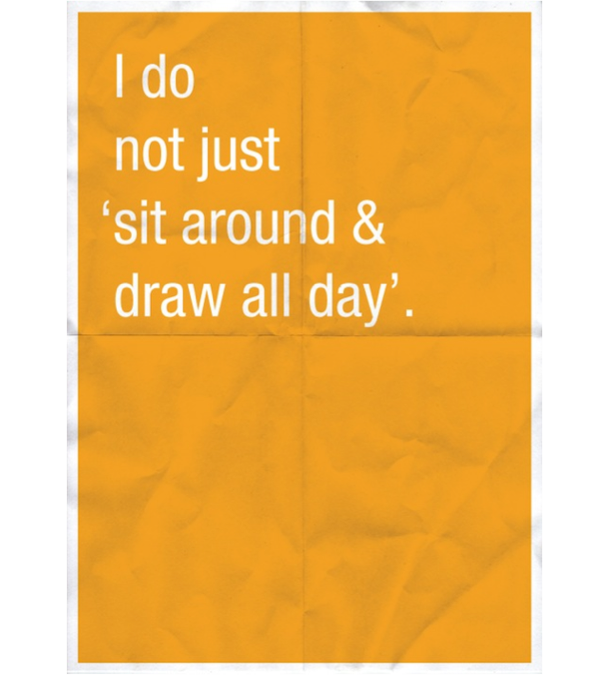
Earlier in the year I came across a fun post on designtaxi.com. It showed a set of posters developed by a London designer called Anneke Short which portrayed the frustrations and realities that designers often face. A frank and comical insight into the challenges for a designer in the creative process when it comes to briefing expectations and perceptions.

I thought it would be fun to show the client side perspective. So here it is - Confessions of a Corporate Professional, what really goes on in a Brand Managers Mind.


Designer
Client


Yes, as clients we need and love to see the corporate or product logo. We are obsessed with it. Deal with it. It gives us reassurance that the design concept will work and we can show it to senior execs. I have seen so many great ideas for packaging and/or advertising get thrown out just because the logo was not visible or treated with care.


Designer

Client


Clients are paying for concepts and ideas. We are hoping that you can come up with them fast so we can get a quick idea of whether one of them is 'on track'  to move forward for approval. After all, we have a lot of stakeholder expectations to manage. A lot of the time our internal colleagues don't know what they want or how to articulate what they need creatively.

Clients are often not open about their motivations when they make a request like this. They do not want to admit they do not know what they or their internal stakeholders are wanting.  A good client requests this when they are trying to get an understanding of what their internal clients want and will share this information up front with the agency. This leads to the point that often clients and agencies enter into the full creative process when really it would be better to explore ideas ...rarely this happens.


Designer
Client


A lot of clients are not experts in creative techniques, production, the concept of studio management or creative software. They have no idea how long something takes to do or how hard it may be. If you then take into account that this is multiplied by the fact that there are internal clients requesting creative work with even less knowledge of these considerations, expectations of efficiency and timings become clouded.

While clients often want 'what they ask for, when they want it',  it is still worth spending the time to explain or identify the process up front. Assisting clients to manage expectations with their internal stakeholders and educating them to be confident to talk about the process helps them be a good mediator when necessary. It will also help them to positively position the design expertise and convey processes.


Designer
Client


Most clients have little choice about the technology platforms they use. In fact in large corporations 'fitting in' rather than 'standing out' is expected to a degree. The ability to put business success first rather than personal agendas.

Believe me, creative people from agencies are often intimidating to clients because they are perceived to be cool trend setters.

We know what agency professionals think of us corporate clients .... we are like PC from the famous MAC and PC campaign. You see us as uptight predicable conformists. This makes us feel slightly awkward around you, because we need to be restrained and considered in our thinking, even if we want to be more daring.


Designer
Client


This would be very frustrating for a designer. You would be amazed at how many clients secretly think they are creative because they have software at hand. Good clients know what their role is in the creative process which revolves around project management, relationship building, influence and professional credibility.

Seriously would a client ever say 'I know my way around a spreadsheet, so send me the budget and I'll play around with it.' It is assumed that there is financial expertise and planning inputs which have been utilised to derive the final version. Yet we often devalue creative work by playing around the edges and losing sight of the discipline needed to produce outcomes.

Designer
Client


Again this perception would be frustrating for a designer. Here's where it comes from.  Clients and their internal stakeholders do not think conceptually or in creative terms most of the time. We spend our days talking about business and industry activities and challenges. So when a designer talks in creative cliches with little business language the perception is they have little understanding of professional realities.


Thank you to Anneke Short for putting these thoughts toghether. They made me smile as I have had the similar thoughts when dealing with internal stakeholders trying to brief me on their needs on client side.  I hope this helps put some perspective on client thinking.

Saturday, April 12, 2014

Entrepreneurs and Innovators Need Only Apply


There is high demand for entrepreneurs and innovators right now. The race for growth and 'break out' innovation is on as businesses look to future proof offers and grow income streams.

It's a great time for creativity and 'go getting.' New ideas need to prevail despite organisational barriers. Taking a 'leap of faith' into a brave new world is the only option for some organisations with technology changing the playing field.

The future is here now, and the talent gap is widening. Companies are fast-tracking cultural change programs to stay ahead of competitors. The 'shout out' for entrepreneurs and innovators is deafening. It seems to be implied in every job advertisement - our company needs individuals that will help us evolve and grow - Entrepreneurs and Innovators need only apply. 

Establishing a workplace that supports process discipline, entrepreneurial tenacity and innovative creative thinking is a challenging construct. A major leadership engineering task. 

New resources acquired to boldly instigate change coupled with established process enforcers makes for an interesting work dynamic. Motivating individuals and establishing interaction rules needs considered attention. Fostering internal partnerships that collaborate effectively to develop solutions requires progressive management thinking.

Below are some thoughts of management style principles to accommodate the entrepreneurs and innovators that every business is chasing:

  • Champion inquisitive and flexible project management practices
  • Embrace diversity
  • Value and reward contribution 
  • Avoid curbing enthusiasm, direct it towards an outcome
  • Respect areas of expertise and opposing professional strengths
  • Encourage exploring leads/ideas to come to 'own' conclusions
  • Be a behaviour moderator - not conformist 
  • Check robustness of ideas and set clear decision frameworks
  • Navigate cross functional politics and decision hierarchies
  • Be a gatekeeper of ideas that do not lead anywhere - allow quirky thoughts and unstructured processes 
  • Maintain an external focus on the customer
  • Be willing to try new approaches 
  • Make process checks pit stops rather than long endurance races
  • Manage risk, set a tolerance for failure
  • Do not over commit - ensure checks and balances are in place

The call is out for entrepreneurs and innovators.....who answers and who listens will determine future success or failures.


Friday, March 28, 2014

Creating Internal Respect for the Brand Signature


The brand mark is like your signature. Would you sign your signature to a statement, idea or representation that does not reflect your values? The answer would inevitably be NO.  

This simple analogy can be applied to business and personal branding. It is relatable way to engage others in making ‘on brand’ judgements in their day to day roles. Too often brand strategy is presented in an abstract way, where others can’t see the relevance to them or their roles.

Social networking has resulted in a focus on personal branding. Job offers, social community acceptance and even friendships can be influenced by an individual’s on-line image and values. Your personal branding can have an impact without knowledge or warning. Thinking that an objectionable on-line persona is immune to a wider audience is misguided.

The idea of ‘living the brand’ through thinking and acting in alignment with core values builds an image over time. In organisations with many employees and customer interactions it is the ultimate positioning tool. The challenge becomes engaging internal audiences to understand this and consistently align their actions to reflect brand values. 

There are organisations attempting to control brand image and manage risk through having access to employee social media sites. While this highlights the importance of consistent brand representation and associations, education and engagement is a more effective long term strategy. 

Every interaction internally or externally creates an impression of the brand. Individual actions will stand out as the exception rather than the rule for brands with strong equity. Building a collective set of positive experiences and associations over time, rather than micro managing negative ones results in increased stakeholder loyalty.

The following is a guide on ways to create internal engagement for the brand strategy.

·       Accessible brand messages:   Branding theory and language can come across as abstract and detached. Drawing analogies to real life examples builds a compelling rationale and makes it relevant. The growth in personal branding has by default heightened the interest and applicability of ‘values’ based decision making, actions and communications.

·       Everyone can recite the brand values: Every employee must be able to recite the brand values and understand what they mean. Providing tools and easy reference points is critical. Find examples of work or interactions that are ‘on brand’ and ‘offbrand’ to clearly demonstrate.

·       Integrate into performance standards and protocols: A way to make brand values accessible in every day work roles in to integrate into existing performance standards and/or protocols for customer and internal decision making, interactions and service standards.

·      Be specific about how ‘inside actions and choices impact ‘outside' perceptions. State this clearly and where possible discuss examples relating to other companies.

Keep posing the question – Would you place your signature here?

Sunday, March 16, 2014

Unleashing the Creative Genius of Generation Y


One of the most difficult challenges for organisations is to motivate Gen Y resources who seemingly need constant engagement and new experiences to stay committed.

Gen X leaders and functional managers find it difficult to tap into what inspires Gen Ys as the conventional ladder of success either alienates or frustrates them. This is often misunderstand as arrogance or a push to fast track their careers.

In my experience the main frustration for Gen Ys is the need to express themselves and their creativity. Being viewed and treated as an individual who has ideas that may be 'outside of their current remit' is important. This is an unusual work situation for Gen Xs who have built and protected their professional areas of expertise.

While the seniority system was broken down and challenged by Gen Xs, it is Gen Ys who are embracing the concept that knowledge and talent can not be contained in the workplace. Add to this the emergence of self expression and opinion through social media and it is not a surprise that Gen Ys appear to be eager to express views whether they are invited too or not.

Gen Ys admire leaders who are not afraid to allow creative expression and idea generation because it makes them feel valued as individuals. Especially in teams where the essence of what is produced is based on imagination, artistry and originality.

The following management approach can be successful in unleashing the creative genius of Gen Y teams:

1) Do not own the process, be clear about owning the outcome: enable teams to input into the process  as Gen Ys have strong opinions, new ideas and approaches to express.

2) Be assessable and approachable to provide quick feedback:  avoid the frustration of teams not being able to move swiftly and losing momentum.

3) Create a spontaneously collaborative team environment: structured 'ideas sessions' can put individuals 'on the spot' or make them feel self conscious.  Encouraging open unstructured collaboration between team members enables quick fire trouble shooting, heightened urgency to contribute to solution finding and random inventiveness. Be prepared for noise, odd comments, laughter and some 'light bulb' moments.

4) Be cool, Stay calm:  creativity is a fun, spontaneous and slightly 'out of control' pursuit. This is in direct contrast to hierarchical reporting line structures where order and control rules interactions. 

Being cool and staying calm when there is no obvious answer or outcome to report is difficult when there is a need to demonstrate progress at regular intervals. A perception of lack of direction and/or progress can developing. Managing internal expectations around this is required.

Setting a challenge, embracing flexibility and conveying confidence in Gen Y teams ability to contribute solutions will create the energy and positivity required to produce great work. 

5) Provide clarity of decision making: ensure that teams have clarity on decision making and who the decision makers are. This ensures authority levels are respected, the approvals process is clear so time is not wasted, there is communication 'up' and guidance is provided. 

6) Reward contributors not just the project owners:  reinforce that individual expression is esteemed and valued.


What are your experiences in managing Generation Y resources.

Saturday, March 1, 2014

Social Media Knowledge The Missing Link for Decision Makers


Social media channels provide an opportunity to convey thought leadership and show an authentic inside into a company. Doing this well requires a continuous commitment to dialogue supported by engaging content.

In formulating the strategy consideration is given to providing rationale which is supported by process. Such as:

1) A business case outlining resourcing requirements
2) New competencies needed 
3) Communications tone and content generation process
4) Measurement and continuous improvement agreement

OK that's all logical. Here's the thing. Usually the decision makers and influencers are aware of the 'hype' around social media however are not active users. They can feel alienated by, naive about and even afraid of how social media works. Why? Because we fear what we don't know and understand.

While a lot of senior execs have FOMO is this area, the risks seem large and it's not good business acumen to apply a YOLO attitude (LOL...couldn't help myself).

A lot of companies spend time educating employees about social media policies and the consequences of online behaviours. This heightens the perception that it is dangerous territory as 'bad examples' are cited widely....great ones rarely when it comes to professional online branding.

Training and educating senior leaders about social media channels is a worthwhile investment of time and resource. It is often over looked and most definitely appreciated as the generation gap for knowledge in this area grows wider. 

I would argue it should be a critical step in any social media strategy development process. Contemporary  communications require up-skilling in this area for employee and external audience engagement. 1:1 sessions are the most effective, supported by larger group training sessions.

It is the missing link in effective corporate social media communications. Senior involvement lifts the conversation from tactical to strategic. Providing the business structure to support effective implementation.

While some may have the view that social channel communication is for a younger generation to manage, the reality is that 'thought leadership' comes from seasoned professionals. There is a significant difference between utilising the channels for promotional purposes and long term corporate positioning.

Knowledge is the missing link. Who really wants to say in a group of peers that they have no idea or are just plain afraid.

So make social media education a priority to drive informed decision making, build thought leadership communications, and lift the conversation from tactical engagement to strategic positioning. 

Knowledge is power or better still knowledge is empowerment!